
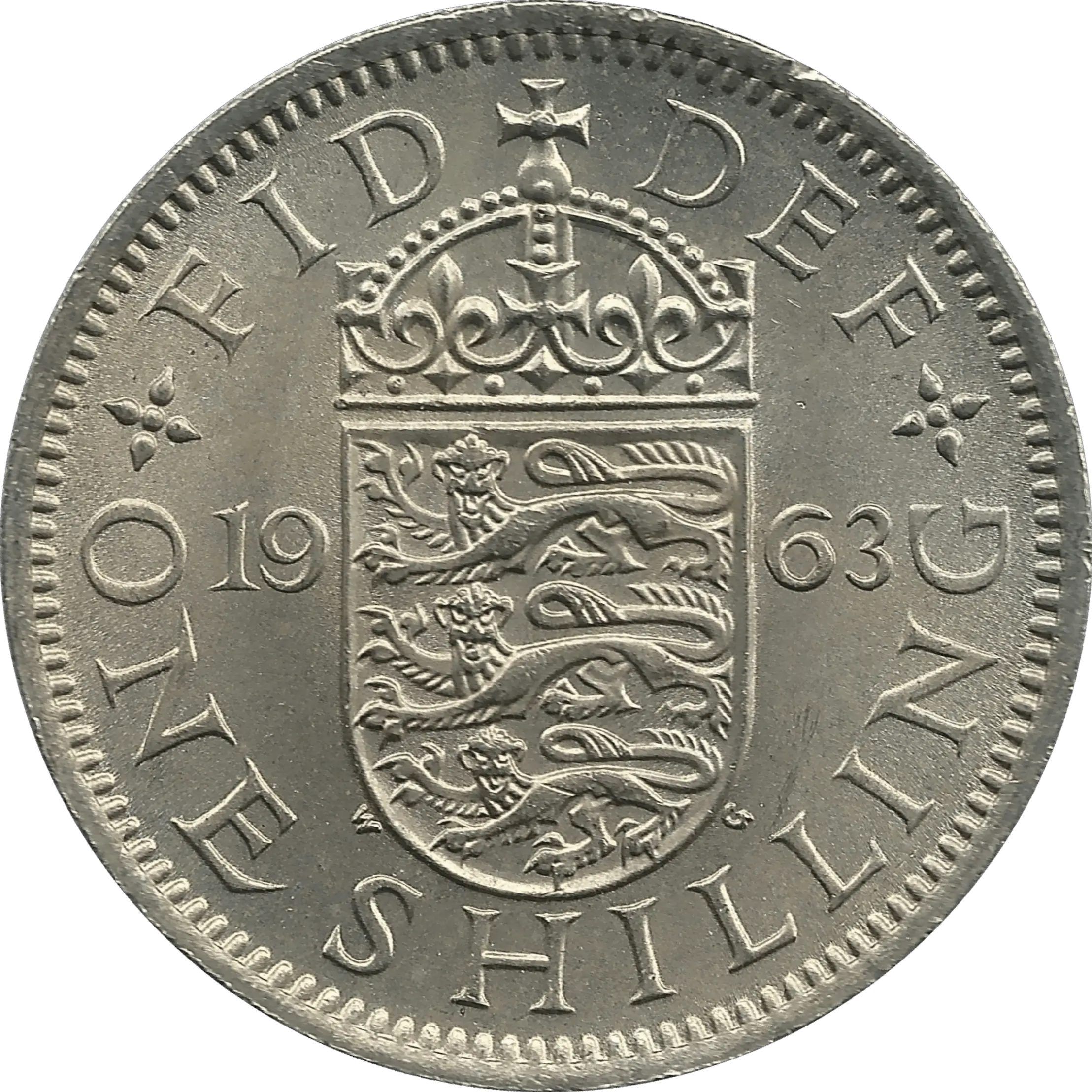
A shilling was a pre-decimal British unit worth 12 old pence. There were 20 shillings in one pound, so a pound contained 240 old pence.
How much is a shilling in today’s money?
At the basic decimal conversion, one shilling equals 5 pence. Britain changed from 20 shillings to 100 new pence in 1971. This is a face-value comparison, not an inflation calculation or a statement of what an old coin is worth to a collector.
- 1 shilling = 12 old pence
- 1 shilling = 5 new pence at decimal conversion
- 2 shillings = 10 new pence
- 5 shillings = 25 new pence
- 20 shillings = £1
The Bank of England’s pre-decimal converter gives the same £sd structure: 20 shillings to the pound and 12 old pence to the shilling. Use its inflation calculator separately when you want to compare historical purchasing power.
When did the shilling stop being legal tender?
Old shilling coins continued to circulate alongside the decimal 5p coin after 1971. The Royal Mint says the shilling was demonetised in 1990. Its decimal conversion does not mean that a shilling can still be spent for 5p today.
The Royal Mint’s 5p specifications explain that the pre-decimal one-shilling coin was redenominated as a 5p coin and circulated alongside the 5p until 1990.
What is an old shilling worth to collectors?
Collector value is separate from the 5p conversion. It depends on the monarch and date, varieties where relevant, metal, condition, and how common that particular issue is. A worn common shilling may be worth little, while a scarcer or better-preserved example may attract more interest.
Do not treat an old asking price as a guaranteed sale price. Compare like-for-like examples and distinguish dealer or marketplace asking prices from completed sales.
Why did Britain use shillings?
Before decimalisation, everyday amounts used pounds, shillings and pence. The system had 240 old pence to the pound, with 12 pence to a shilling. Britain changed to 100 pence in the pound on Decimal Day, 15 February 1971.
A shilling was also commonly called a bob. The nickname’s history is discussed by The Royal Mint’s guide to coin nicknames.
For a short history and identification checklist for the coin, see our guide to what a British shilling is.