
A groat was a large British silver coin worth four old pence. The name is associated with the size of the coin, and the denomination is often described as a fourpence.
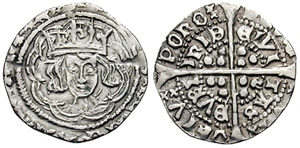
Edward I introduced an early English groat in the late thirteenth century. The coin did not immediately become a lasting success. Groats became more widely established under Edward III in the fourteenth century.
Three groats made one shilling under the pre-decimal system. That relationship helps place the denomination among other old British coins, but it does not give a modern collector price.
What does a groat look like?
The design changed across reigns and periods. Useful details to record include:
- the monarch’s portrait or name
- the lettering around the edge of the obverse
- the cross and other elements on the reverse
- the mint or place references where visible
- the date or historical period
- the coin’s size, weight and condition
A groat should not be identified from one design feature alone. Medieval and later issues can differ considerably, and worn lettering can make a reading uncertain. A half-groat is a related but different denomination.
Is a groat rare or valuable?
Not every groat has the same rarity or market value. The answer depends on the exact issue, condition, authenticity and demand. A worn photograph is not enough to establish those points, and a historical description should not be presented as an individual valuation.
If you are recording a coin, write down everything you can read and avoid cleaning it. Compare the description with museum or mint references before looking at auction results. Sold prices, asking prices and catalogue descriptions are not interchangeable.
Our guides to what a shilling is and how to read a UK coin explain the wider pre-decimal context. For help researching comparable values, see our guide to what a UK coin is worth. For a specific historical object, a museum catalogue or qualified numismatist may be more useful than a generic online price list.