
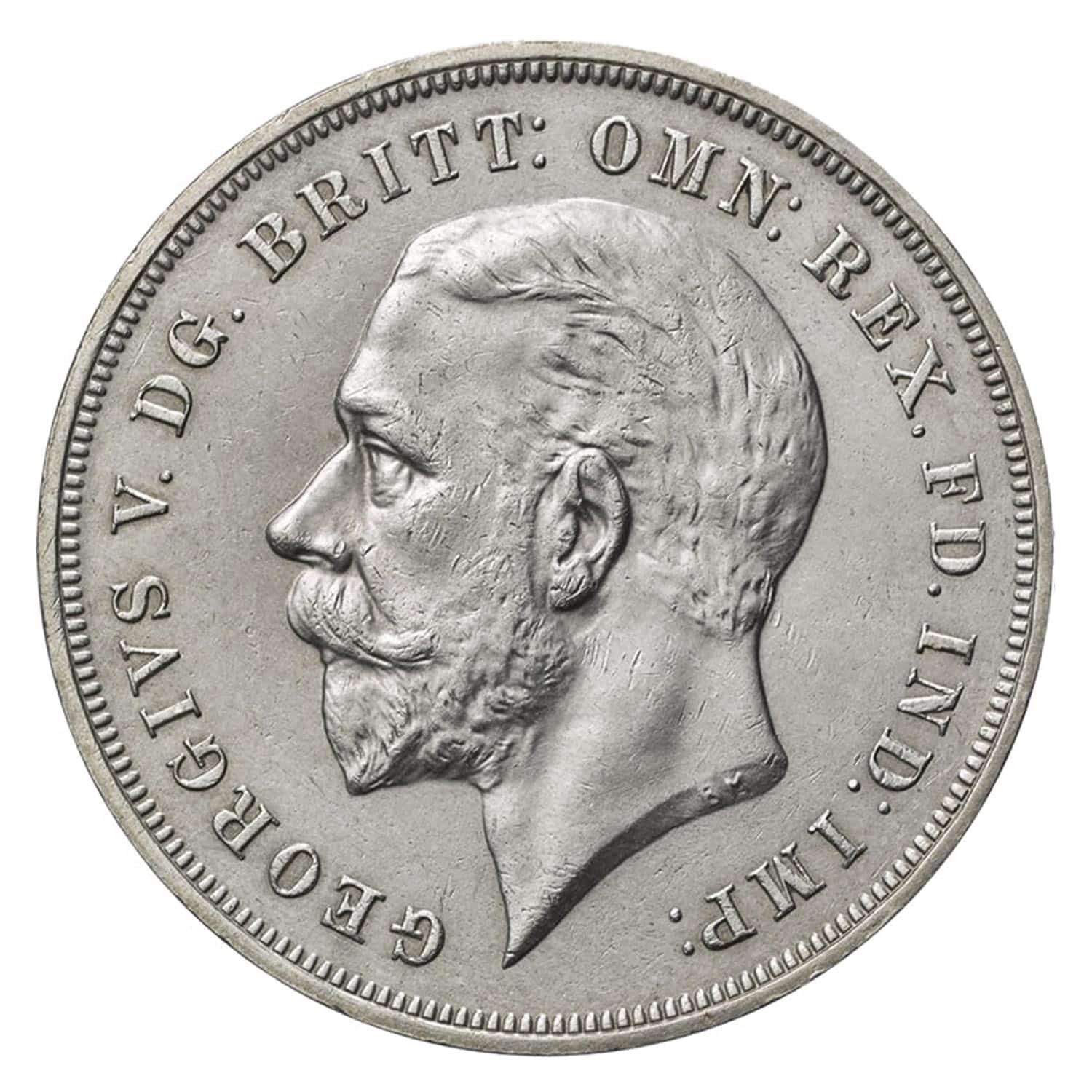
The 1935 Jubilee Crown is the George V Silver Jubilee crown commonly known as the Rocking Horse Crown. It is a historic commemorative coin, and the exact finish and edge variety matter when identifying one.
1935 Jubilee Crown specifications
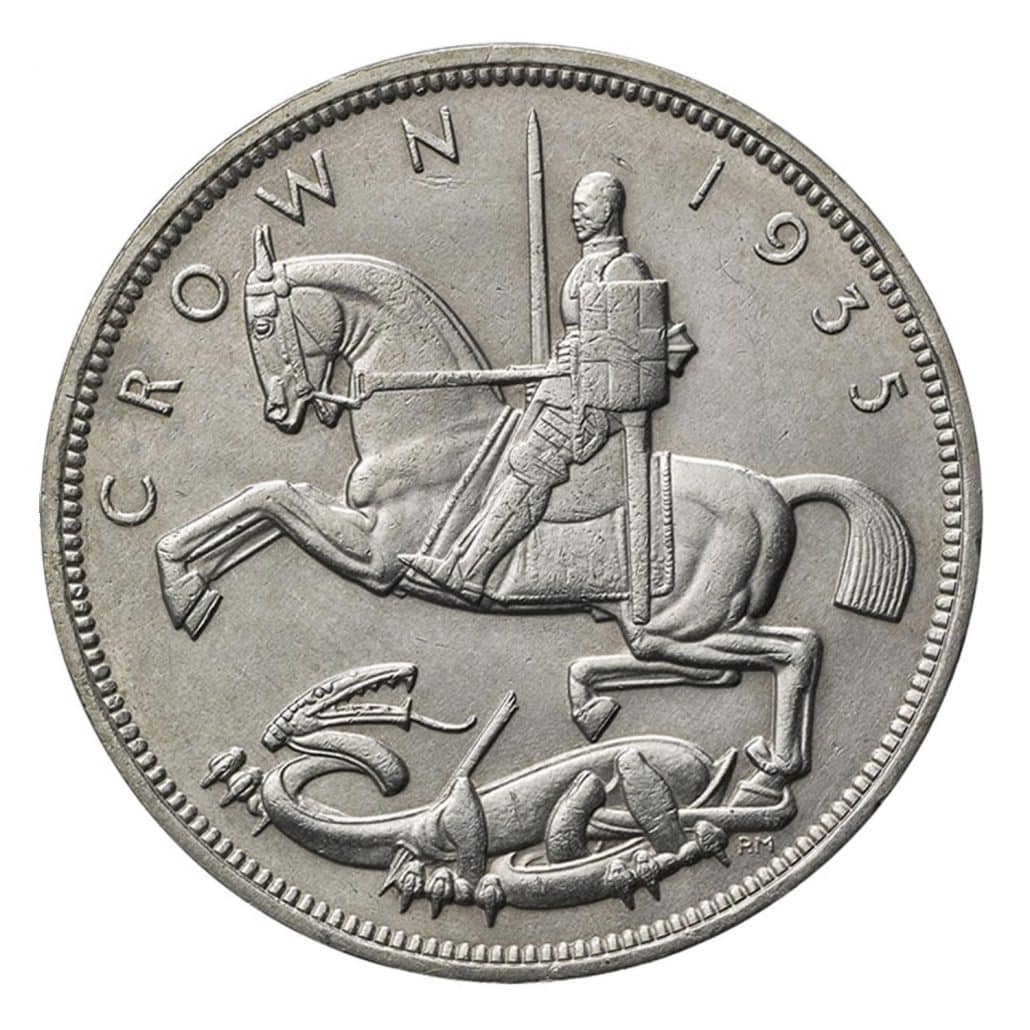
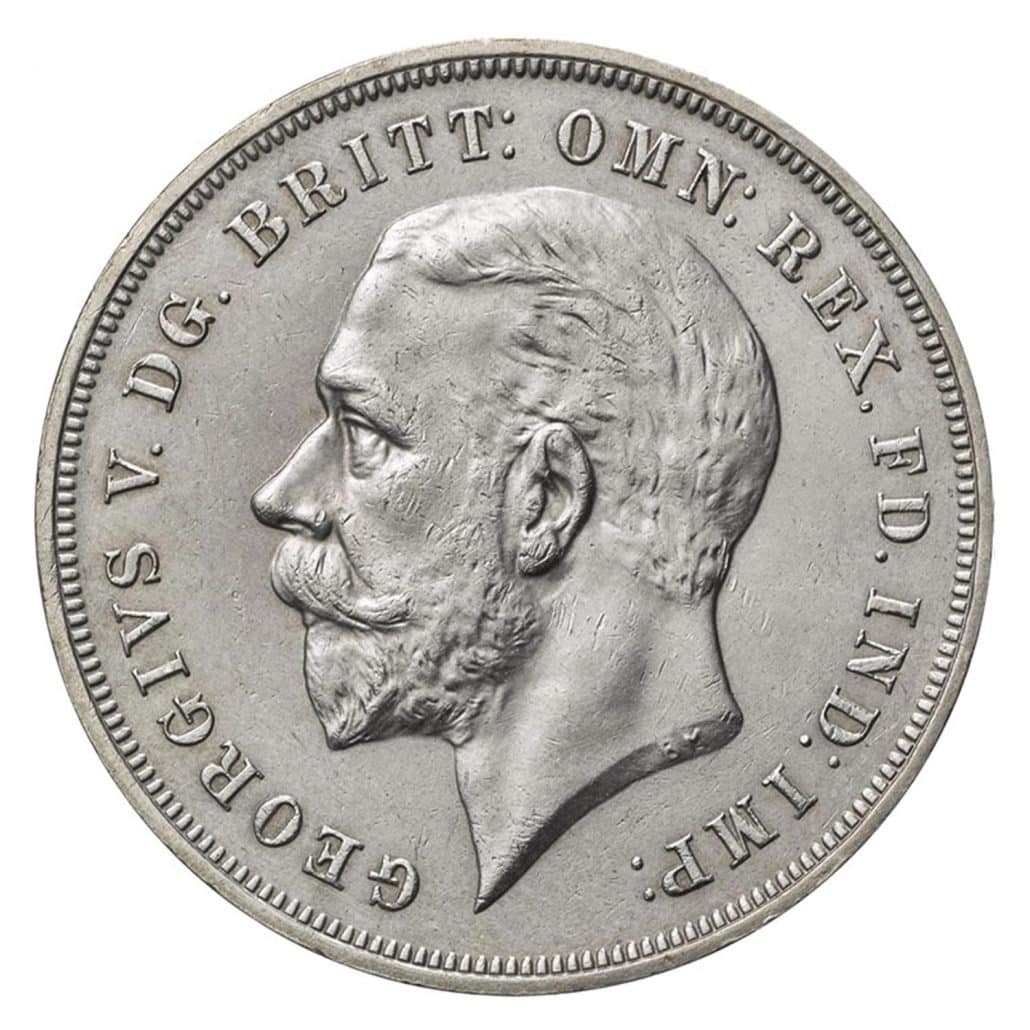
The regular issue is catalogued as 50% silver, weighing about 28.31 grams and measuring 38.61 millimetres in diameter. The obverse portrait is by Bertram Mackennal. Percy Metcalfe designed the reverse, which is often described as the Rocking Horse design.
Numismatic references record 714,769 regular pieces. Separate raised-edge silver proof, gold proof, pattern and possible edge-variety entries should not be combined with the regular mintage without a specific catalogue reference.
How to identify the 1935 crown
Check the date, George V portrait, reverse design, edge lettering, weight, diameter and finish. Photograph the complete edge if the lettering looks unusual. A damaged or partly visible inscription is not enough to establish an error.
How much is it worth?
Value depends on whether the coin is a regular strike, raised-edge proof, gold proof, pattern or an altered example. Grade, surface quality, cleaning, edge damage, authenticity and provenance also affect demand.
Do not rely on old online, retailer or dealer prices, and do not treat a claim that the coin is worth thousands as evidence. Compare recent completed sales of the exact finish, variety and grade. Record the sale date, certification, lot contents and buyer’s premium.
Edge varieties and errors
Edge lettering is an important part of identification, but an unusual-looking edge should be checked against a recognised reference such as Spink. A recognised numismatist or auction specialist is better placed to assess an apparent error than a generic online listing.