UK £5 coins are usually commemorative coins, and their resale value depends on the design, issue type, condition and packaging. The face value is £5, but a collector may pay more or less than that amount.
There is no reliable single average price for every £5 coin. Compare recent completed sales for the same design and version. A seller’s asking price is only an advertised amount and may not reflect what buyers have paid.
This guide explains the main factors that affect value and how £5 coins differ from ordinary coins found in circulation.
What Are £5 Coins?
The modern UK £5 coin developed from the crown, a large commemorative denomination that continued after decimalisation.
It all starts with the crown – a coin that was first issued in the 16th century. Towards the end of the 19th century and into the 20th century the crown turned into more of a commemorative coin that wasn’t used much in daily life.
Fast forward to decimalisation in 1971 and the crown was given the value of 25 new pence, as its pre-decimal value was 1/4 of a pound.
Between 1971 and 1981 there were several 25 pence coins produced, which are often referred to simply as crowns or ’25 pence crowns’. Some of these include the 1972 Silver Wedding crown, as well as the 1981 Charles and Diana Wedding crown.
In 1990, the crown denomination was set at £5 for a coin marking the Queen Mother’s 90th birthday. The Royal Mint has continued to issue £5 commemorative coins for later events and anniversaries.
The First £5 Coin
The very first £5 coin produced had an obverse designed by Raphael Maklouf and the reverse by Leslie Durbin; and paid tribute to the Queen Mother’s 90th Birthday.
This coin marked the beginning of a long tradition of £5 coins being produced by the Royal Mint almost every single year since then.
What Affects The Value Of A £5 Coin?
Price depends on the exact coin. Check the denomination, date, metal, finish, mintage information, condition and whether the original box and certificate are included.
Mintage
The mintage of £5 coins varies greatly between designs, and this can have an impact on how much they sell for, particularly on second-hand marketplaces like eBay.
A low mintage can attract collector interest, but it does not guarantee a high resale price. Demand, condition and the version of the coin still matter.
Type Of Finish
Royal Mint £5 issues may be available in different finishes, such as Brilliant Uncirculated, Proof and precious-metal versions. Identify the finish before comparing prices, because these versions are not directly interchangeable.
Gold Proof coins can have a much higher original price than base-metal versions because of their metal content and production. Their resale price still depends on the individual issue and the market, so do not assume that every gold coin will sell for a profit.
What Is The Rarest £5 Coin?
It is not accurate to name one £5 coin as the rarest without defining the version and using comparable production data. A low mintage figure should be checked against an authoritative source, and rarity should not be inferred from a high asking price.
Prices for individual commemorative £5 coins change over time. Use completed sales for the same version, and record the condition, packaging and date of sale when making a comparison.
Are £5 Coins Legal Tender?
First and foremost, let’s clear up the meaning of legal tender, as it is commonly misinterpreted in today’s society. So, what exactly is legal tender?
“Legal tender refers to coins or banknotes that must be accepted if offered in payment of a debt”
The Royal Mint explains that all UK coins, including non-circulating commemorative coins, are authorised as legal tender by Royal Proclamation. Legal tender has a narrow meaning for settling debts. It does not mean that every shop, bank or business must accept a commemorative coin in an ordinary transaction.
What matters is some smaller denominations, such as the 1p or 2p coins, are only legal tender up to a certain amount; in these cases, the total is 20 pence. So that means you are legally only allowed to pay with 1 or 2 pence coins up to a value of 20 pence.
The legal-tender limits are mainly relevant when coins are offered to settle a debt. They should not be treated as a guarantee that a retailer will accept a particular commemorative coin at the till.
Many £5 coins are non-circulating commemorative issues. Banks and businesses are not required to accept them for normal purchases, so collectors should not expect to receive them in change or spend them like a standard circulating £1 or £2 coin.
Where Can You Exchange A £5 coin?
So, we’ve established that £5 coins are legal tender, but where can you actually exchange them?
A shop can choose whether to accept a non-circulating commemorative coin. If you want to exchange one, ask the intended bank or business first. The practical value may be its collector market rather than its use as everyday change.
Do Banks Or Post Offices Accept Them?
Policies vary between banks and branches, and a post office or retailer may also refuse a commemorative coin. Check before travelling and do not assume that legal-tender status guarantees acceptance.
Other rare £5 coins And Crowns
As the £5 coin is a continuation of the beloved Crown coin, let’s take a look at some notable examples that have been released through the years.
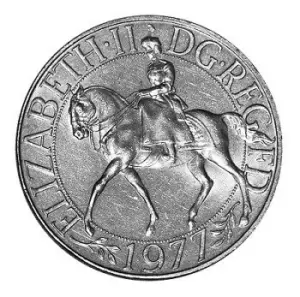
The 1977 Silver Jubilee Crown
In 1977, to commemorate the silver jubilee of the Queen, over 37 million Crowns were minted. The majority of these coins were made of cupronickel, with some being made in proof standard (92.5% silver).
Silver proof and cupronickel versions can sell for different amounts. Compare examples with the same finish and packaging, and use completed sales rather than an old general estimate. You can read more in-depth about the 1977 Silver Jubilee Crown in our article here.
2002 Golden Jubilee £5 Coin
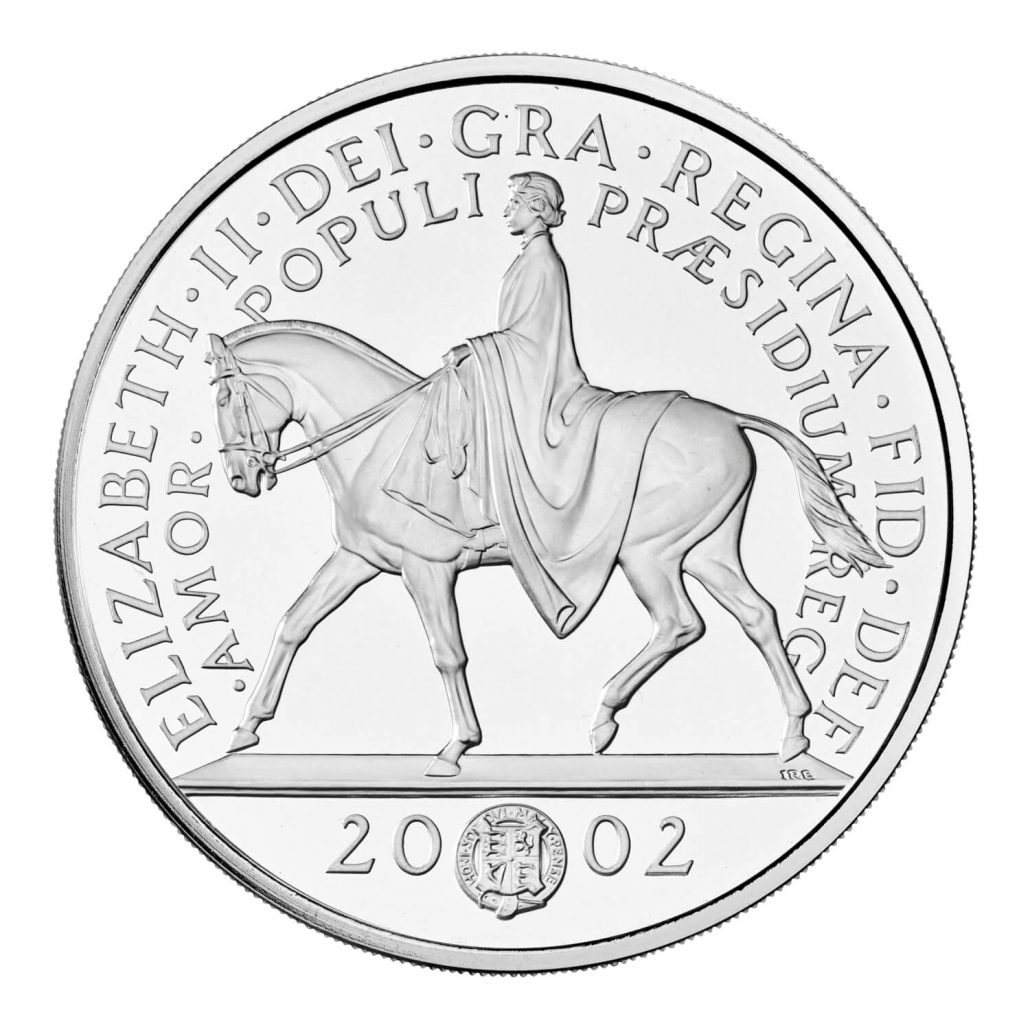
Another popular £5 coin is the Golden Jubilee £5 which was issued in 2002.
The 2002 Golden Jubilee £5 is another example of a commemorative issue. Its resale price depends on the exact condition and presentation, so check recent comparable sales before assigning a value. Read more in our Golden Jubilee coin article.
Queen’s 90th Birthday £5 Coin
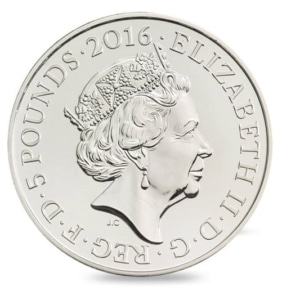
In 2016 the Royal Mint celebrated the Queen’s 90th birthday with a £5 coin, with an obverse designed by Jody Clark and reverse by Christopher Hobbs.
Cupronickel and proof versions should be valued separately. Condition, packaging and the presence of a certificate can affect the result, so compare like-for-like completed sales rather than relying on an undated range.